"Passion Week"
“O death, where is thy sting? O grave, where is thy victory? … thanks be to God, which giveth us the victory through our Lord Jesus Christ”
—1 Corinthians 1:55,57
The time from Palm Sunday to Easter is known as “Passion Week.” It is so named because of the passion with which Jesus willingly went to the cross to pay the price for our sin. Knowing full well what lay before Him, “he steadfastly set his face to go to Jerusalem.” (Luke 9:51) The gospels of Matthew, Mark, Luke and John focus nearly a third of their attention on this week in the life of Jesus alone.
The week begins with people gathering in Jerusalem for Passover. The crowds were like a powder keg filled to the brim with both messianic fervor and hatred of Roman and Herodian rule that stirred the winds of revolution. Jesus, with his teaching authority and ability to capture the imagination of the masses, not least on account of his ability to heal and raise the dead as He did with Lazarus, looked very much the part of the long-awaited Messiah. To gain and maintain power, the Romans could kill, which they did quite effectively, but how could they defeat a leader who could raise the dead at will?
After observing the Sabbath (Friday evening through Saturday evening) at Bethany, Jesus arose Sunday morning to enter the city of Jerusalem. It was the first day of the last week of his earthly life.
On that morning, Jesus and his disciples were on the Mount of Olives as they approach Jerusalem. He sent two of his followers to a nearby village, instructing them to bring a donkey on which he would sit for his entrance into Jerusalem. By this intentional symbolic action, Jesus clearly communicated his kingship to the expectant crowds of Passover pilgrims by fulfilling the prophecy of Zechariah 9:9, that Israel’s future king would come riding on the foal of a donkey, and by copying Solomon’s entrance into Jerusalem when he was declared king. As Jesus makes his westward descent down the Mount of Olives and toward the Holy City, he weeps over Jerusalem.
The crowds rightly interpret his actions with expectant joy and respond to His entrance into the Holy City by spreading robes and leafy palm branches in his pathway to create a royal carpet and by acclaiming Him their Davidic king. “And they that went before him, and they that followed after, cried, saying, Hosanna! Blessed is he that cometh in the name of the Lord; That bringeth the kingdom of our father David; Blessed is he that cometh in the name of the Lord; Hosanna in the highest”. (Mark 11:9-12)
On Monday, Jesus enters the temple. The House of Prayer and dwelling place of God had become a den of thieves. Jesus threw them out and the Temple was cleansed. He had kept the Passover command to cleanse the home by cleansing his Father's house of the leaven of the Pharisees. And having been cleansed the temple became the scene for much of Jesus’ teaching the rest of that week. The cleansing of the temple also represented Jesus’ mission to expose, root out, and defeat the sin in each of our lives. We are made clean when we are washed in the blood of the lamb and once cleansed become a dwelling place for His Spirit.
Tuesday was the last and greatest day of the public ministry of Jesus. His authority was questioned (Matthew 21:21-25), He was confronted about paying tribute to Caesar (Matthew 22:17-25), He praised the widow and her two mites (Mark 12:47-50), He answers the scribe’s question regarding which was the greatest commandment in the law (Mark 12:34-39), He speaks a parable about laborers in His kingdom (Matthew 20:1-15), He gave the parable of the marriage supper (Matthew 22:2-14), and He issues the great denunciation and final warning in eight “woes” to the leadership of the Jews causing Jesus to “begin to weep over Jerusalem.” (Matthew 23:36).
His final words to them were, “I say unto you, that ye shall not see me henceforth, and know that I am he of whom it is written by the prophets, until ye shall say, Blessed is he who cometh in the name of the Lord, in the clouds of heaven, and all the holy angels with him.” (Matthew 23:39-40) These words stirred an understanding in His disciples “that he should come again on the earth, after that he was glorified and crowned on the right hand of God.” (Matthew 23:41)
Jesus then leaves the temple and goes to the Mount of Olives along with His disciples and there He tells them about “the destruction of the temple, and the Jews; and … [the] the sign of … [His] coming; and of the end of the world” (Matthew 24:4) This long day of teaching is closed with the parable of the ten virgins and the parable of the talents.
On Wednesday, Jesus rests in Bethany and Judas agrees to betray Him. On Thursday, late in the day as soon as three stars were visible in the sky, it became the day of unleavened bread. The day when the Paschal Lambs would be slain for the Paschal Supper. Jesus gathered his disciples together in the upper room to share a Passover meal with them and with it the institution of the Lord’s Supper.
After their meal together, Jesus and the disciples leave the Upper Room and go to the Garden of Gethsemane, where Jesus prays in anguish to His Father. Luke says that "he sweat as it were great drops of blood falling down to the ground." (Luke 22:44).
Late that night in Gethsemane, Jesus was betrayed with a kiss by Judas and arrested by the Sanhedrin. He was taken to the house of Caiaphas, the High Priest, where the full council had assembled to make their claim against Jesus. He suffered the shame of false accusations, rebukes, ridicule, whippings, and abandonment. After various unlawful trials, he was condemned to death by crucifixion, one of the most painful and disgraceful practices of capital punishment ever afflicted on mankind.
Before Christ was led away, soldiers pierced him with a crown of thorns while “they mocked him, saying, Hail, King of the Jews!” (Matthew 27:31) Then Jesus carried his crucifixion cross to Calvary where he again was mocked and defamed as Roman soldiers nailed him to a wooden cross.
Jesus delivered seven final remarks from the cross. His first words were, "Father, forgive them; for they know not what they do" (Luke 23:35). His last words were, "Father, into thy hands I commend my spirit." (Luke 23:47) By Friday evening, Nicodemus and Joseph of Arimathea had taken Jesus' body down from the cross and laid it in a tomb.
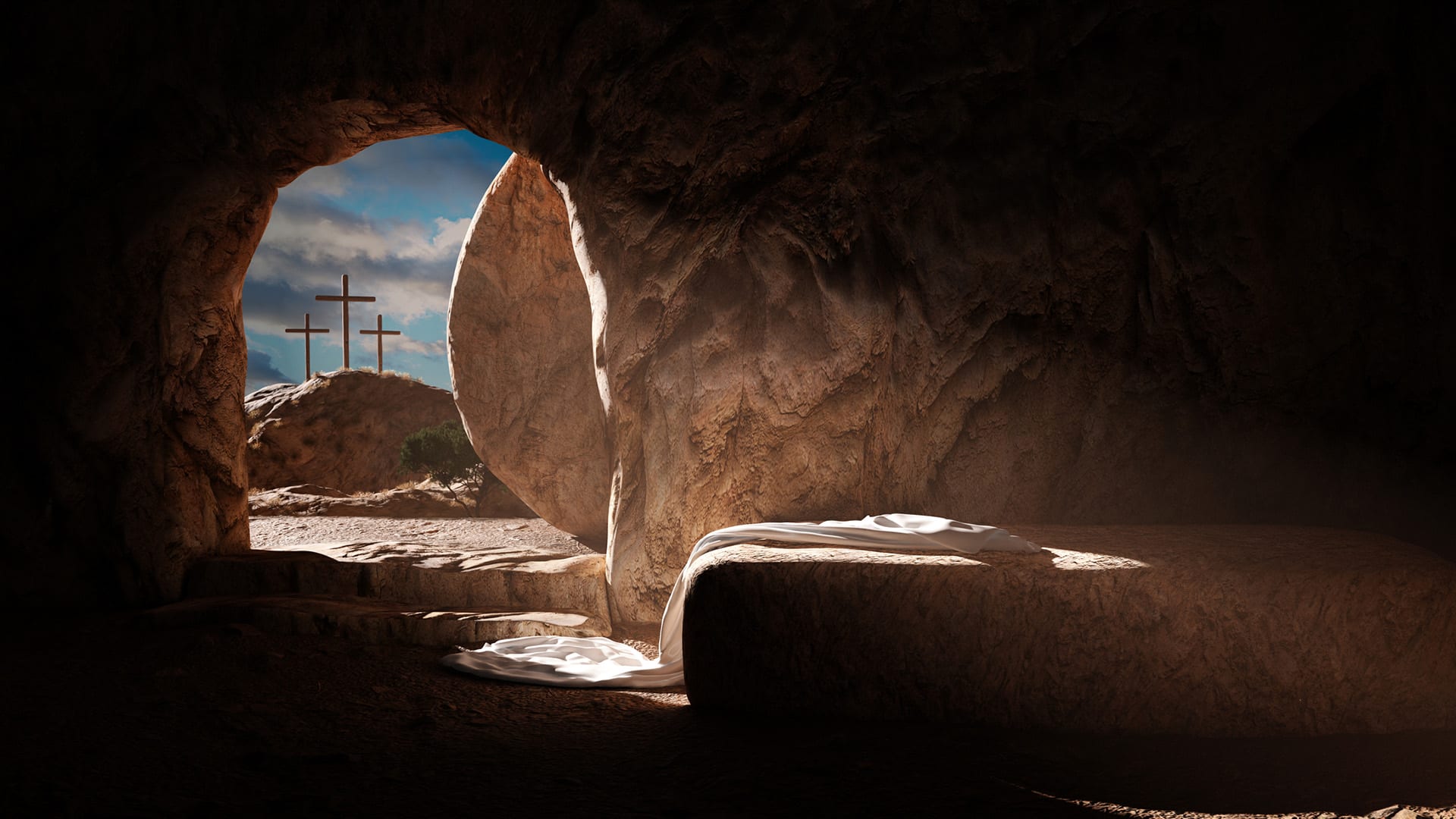
On Sunday, He rose from the dead. Conquering death not only in Himself but for all of humanity. He paid the price and we are the victors.
Our preaching in March will center on a few of the events leading up to Jesus’ death and resurrection.
March 1: Power over death - The Raising of Lazarus
March 8: Power over sin - The Cleansing of the Temple
March 15: The coming Kingdom - Olivet Discourse
March 22: The new Passover - The Last Supper
March 29: The coming King - Triumphal Entry - Palm Sunday
April 5: Victory over death - Resurrection Sunday
We’ve given some of the scriptural references to these and other events during Passion Week herein. Take opportunity to read and ponder them as we consider in the coming month the Passion of our Lord and Savior. Take the opportunity to invite someone to join us during this time leading up to Resurrection Sunday.